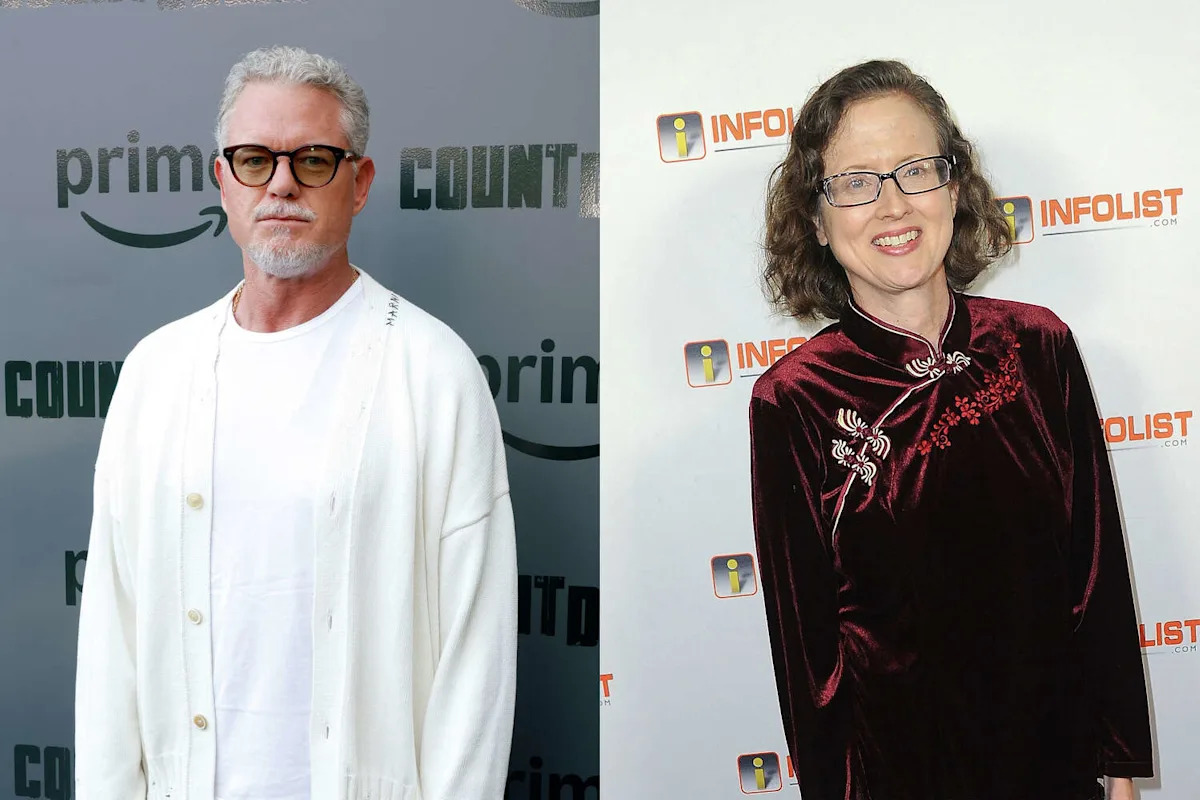
Eric Dane's Post-Death Bullying Claims Rock Grey's Anatomy
The recent passing of beloved actor Eric Dane, best known for his iconic role as Dr. Mark Sloan on *Grey's Anatomy*, sent ripples of sadness across Hollywood and among fans worldwide. Dane, who captivated audiences as "McSteamy" from 2006 to 2012, tragically succumbed to a reported battle with ALS on February 19, 2026, at the age of 53. Tributes poured in from former co-stars and admirers, celebrating his career and his advocacy for ALS awareness in his final months. However, the period following his death has been unexpectedly marred by a surprising and serious accusation, as a former co-star, Laura Ann Tull, has come forward with **eric dane death bully** claims, alleging years of mistreatment on the *Grey's Anatomy* set. These posthumous accusations have opened a complex dialogue about workplace dynamics, accountability, and the challenging nature of allegations made after a public figure's passing.
The Shocking Allegations Against Eric Dane
In the days immediately following Eric Dane’s death, Laura Ann Tull, who worked as a background actress on *Grey's Anatomy*, took to social media to share explosive allegations. Tull described Dane as a "narcissist" and a "coward" who engaged in bullying and mockery. According to her posts, Dane allegedly mistreated her during her time on the show, even while she was grappling with personal health issues.
Her statements were stark and direct, asserting that Dane "abused me. Bullied me. Made fun of me." Tull emphasized that his death "doesn't change the destruction he caused me," and expressed a wish that he had apologized and admitted his alleged actions during his lifetime. These claims from a former background performer paint a contrasting picture to the public persona of the actor and the character he famously portrayed. The gravity of such accusations, made after an individual is no longer here to respond, naturally raises questions about their timing, validity, and the broader context of production environments.
It's important to note that these weren't Tull's first public statements regarding her experiences. She had previously alluded to similar sentiments in a 2018 essay, reflecting on her time on the show and mentioning Dane by name. In that earlier account, she stated that while she never spoke to Dane directly, she believed he had spoken negatively about her to others on set. This consistency in her claims over several years suggests a deeply rooted personal experience she felt compelled to share.
A Complex Departure: Eric Dane's *Grey's Anatomy* Exit Revisited
Adding another layer of intrigue to her **eric dane death bully** claims, Laura Ann Tull also alleged that she played a significant role in Eric Dane's departure from *Grey's Anatomy* in 2012. She stated that she contacted executives connected to the show, including the office of creator and executive producer Shonda Rhimes, believing her concerns contributed to his eventual exit. For a deeper dive into this specific claim, you can read more here:
Grey's Anatomy: Co-Star Claims She Got Eric Dane Fired.
However, the official narrative surrounding Dane's exit in 2012 differed significantly. At the time, statements from ABC and Shondaland framed his departure as a mutual decision, primarily driven by evolving storylines for his character, Dr. Mark Sloan. Dane himself later offered a slightly different perspective in interviews, suggesting he felt he had been let go amidst broader production considerations. Reports from sources like *The Hollywood Reporter* indicated that budget and creative decisions often influenced the departure of long-running, and thus more expensive, cast members. Dane also acknowledged personal struggles, including issues with prescription medication, but maintained that these were not the primary reasons for his *Grey's Anatomy* exit. For a more comprehensive look at the various factors surrounding his departure, explore
Eric Dane's Grey's Anatomy Exit: Unpacking Bullying Allegations.
Crucially, there has been no public confirmation from ABC, Shondaland, or representatives for Dane regarding Tull's claims that she influenced his exit. Public records and official statements from the network and production company do not corroborate her assertion, leaving her claim unverified by independent sources. This disparity between personal allegations and official accounts underscores the challenge of piecing together the full truth of past events on large, complex productions.
The Unanswered Questions and the Nature of Set Dynamics
The surfacing of these **eric dane death bully** allegations so many years after the alleged events, and particularly after the actor's passing, raises a multitude of questions about workplace environments in the entertainment industry. Large-scale productions like *Grey's Anatomy* involve hundreds of cast and crew members, and the dynamics on set can be incredibly complex.
* **Reporting Mechanisms:** In any workplace, having clear and accessible channels for reporting misconduct is paramount. While specifics of *Grey's Anatomy*'s internal complaint system at the time are not fully public, the very nature of such allegations highlights the importance of fostering a culture where individuals, regardless of their position (from lead actors to background performers), feel safe and empowered to report issues without fear of reprisal.
* **Hierarchical Structures:** Film and television sets often operate with distinct hierarchies. Main cast members typically hold a position of significant influence, which can sometimes create power imbalances. Background actors, by the nature of their role, often have limited direct interaction with principal actors and may feel less agency in reporting perceived mistreatment.
* **Verifying Past Claims:** When claims surface years later, and especially when a key individual is no longer alive, independent verification becomes incredibly challenging. Memories can fade or shift, and physical evidence may be scarce or non-existent. This places a significant burden on those attempting to understand and process such historical allegations.
Neither Eric Dane's representatives nor network executives have publicly responded to Laura Ann Tull's latest statements. This silence could be due to several factors: the difficulty of addressing posthumous claims, potential legal considerations, or simply a policy of not commenting on unverified allegations from over a decade ago.
Navigating Posthumous Accusations in the Public Eye
The situation surrounding Eric Dane and the **eric dane death bully** claims serves as a poignant reminder of the complexities inherent in public life and posthumous reputations. For fans, it can be disorienting to reconcile the image of a beloved actor, celebrated for a popular role and lauded for his brave fight against ALS, with serious allegations of misconduct.
* **Public Perception vs. Private Reality:** It's a common challenge for public figures that their on-screen personas or curated public images may not always align with their personal conduct. When serious allegations emerge, they force a re-evaluation of how we perceive individuals in the public eye.
* **The Weight of Allegations:** While allegations are not convictions, they carry weight and can significantly impact an individual's legacy, even after their death. In such cases, the public is often left to grapple with conflicting narratives without the benefit of a full and verified account.
* **Importance of Due Process:** In any situation involving accusations, the principle of due process is vital. This means allowing all parties the opportunity to present their side and for claims to be thoroughly investigated and corroborated. When one party is deceased, this process is inherently incomplete, creating a void where definitive answers are hard to come by.
For individuals who may experience or witness workplace misconduct, practical advice often centers on timely and thorough documentation. This includes keeping records of dates, times, specific incidents, and any witnesses. Utilizing official reporting channels within an organization is typically the recommended first step, providing a formal avenue for concerns to be addressed and investigated. While the outcome is never guaranteed, a well-documented process can be crucial in ensuring accountability and fostering a safer work environment for everyone.
Conclusion
The allegations made by Laura Ann Tull against the late Eric Dane introduce a somber and complex dimension to the narrative surrounding his life and legacy. While Dane is remembered by many for his charisma on *Grey's Anatomy* and his courage in battling ALS, Tull's claims of being bullied and mistreated on set add a challenging perspective. It's crucial to reiterate that while these are serious allegations, they remain unconfirmed by independent sources, particularly regarding her asserted role in his departure from the show. The situation highlights the enduring impact of workplace experiences, the complexities of set dynamics in Hollywood, and the delicate nature of posthumous accusations. As conversations about workplace safety and accountability continue to evolve, this case serves as a powerful reminder of the many narratives that can exist within a single professional environment.